Quick Answer: How Does Rideshare Insurance Work After an Uber or Lyft Accident in Georgia?
After an Uber or Lyft crash in Kennesaw, Georgia, the first question is not simply who caused it. You also need to know whether the rideshare driver was actively driving for the company at the time of the crash. Georgia law allows for different insurance limits depending on whether the driver was offline, logged in and waiting to accept a new ride, or driving a passenger. An injury claim could involve the rideshare driver, another driver, the platform’s insurance policy as well as uninsured or underinsured motorist coverage. Remember to preserve the trip receipt, screenshots, driver and vehicle details, and medical evidence to make it easier to determine what coverages are available and to provide your damages. Finally, it is important to note that the $1 million figure often associated with many rideshare claims is a policy limit, not a guaranteed settlement amount.
- App off: Driver's personal auto insurance generally applies.
- Logged in, waiting: Georgia's lower TNC coverage requirements apply.
- Ride accepted: Georgia requires $1 million in coverage per occurrence.
The driver's app status at the exact time of the crash is therefore one of the first things a rideshare accident lawyer should investigate.
People often think of a rideshare crash as an ordinary car wreck with a larger insurance policy. However, these claims also require answering a more nuanced question about the rideshare driver’s status at the time of the crash.
Fault still matters. As do the injuries, the medical evidence, and the effect the collision has on a person's life. But an Uber or Lyft claim also requires examination of the digital timeline. A matter of minutes, or even seconds, can change which insurance policy applies and how much coverage is available.
Our firm regularly handles claims involving Uber and Lyft drivers. The most critical piece of evidence we examine at the beginning of one of these cases is the driver's status in the app: Was the app off? Was the driver logged in and waiting for a request? Had the driver already accepted a ride? The answer can affect the applicable policy, the available limits, and the evidence that needs to be preserved. Uber insurance in Georgia depends primarily on what the driver was doing in the app at the time of the crash.
Our firm regularly handles claims involving Uber and Lyft drivers. The most critical piece of evidence we examine at the beginning of one of these cases is the driver's status in the app: Was the app off? Was the driver logged in and waiting for a request? Had the driver already accepted a ride? The answer can affect the applicable policy, the available limits, and the evidence that needs to be preserved. Uber insurance in Georgia depends primarily on what the driver was doing in the app at the time of the crash.
These cases also require a review of current Georgia law. In 2025, Georgia enacted a new statute, O.C.G.A. 40-1-201, addressing when a rideshare platform may be held liable for its driver's conduct. An experienced Georgia trial lawyer can no longer simply say "Uber is always responsible" or "Uber can never be sued." The correct answer depends on the details of the claim, the platform's own conduct, and the evidence available to the parties involved.
What Makes a Rideshare Accident Claim Different From an Ordinary Car Accident Claim?
A rideshare collision is still a motor vehicle negligence case, but it can add several issues that do not appear in a typical wreck involving individual drivers:
- The rideshare driver's app status can change the insurance limits. The amount of coverage available turns on whether the driver was offline, waiting for a request, or had accepted a ride.
- More than one insurer may be involved. The driver's personal insurance policy, the rideshare policy, another driver's policy, and one or more of your own UM/UIM policies may all need to be reviewed.
- Digital evidence matters. Trip receipts, timestamps, in-app messages, route information, log-on records, and platform communications may help establish the coverage period and the facts of the crash.
- The platform-liability analysis has changed. Georgia's 2025 law limits claims based only on the platform's role in connecting riders and drivers, while preserving fact-dependent issues involving the company's own negligence, criminal misconduct, or statutory noncompliance.
This combination is why an experienced trial lawyer will never treat a rideshare claim as just another routine car accident with a familiar company name attached to it.
The Driver's App Status Often Determines Which Insurance Coverage Applies
Georgia refers to app-based rideshare companies as “transportation network companies” (TNC). Under O.C.G.A. 33-1-24, the company must maintain a primary motor vehicle policy that recognizes the driver's rideshare activity. The required insurance limits change based on the rideshare driver's status.
| Driver/app status | Georgia minimum TNC coverage | Why it matters |
| App off | No statutory TNC policy for that period; the driver's personal auto policy is generally the starting point, subject to its terms. | The crash may look more like an ordinary auto claim because the driver was not providing rideshare services at that time. |
| Logged in and available, but no ride accepted | At least $100,000 for bodily injury or death to all persons in one accident, with a maximum of $50,000 for one person, plus $50,000 for property damage. | The rideshare policy is required even though no passenger is in the car. A personal policy may exclude coverage while the driver is logged in. |
| Ride accepted through completion of the ride or transaction | $1 million per occurrence for death, personal injury, and property damage; UM/UIM minimums of $100,000 per person, $300,000 per accident, and $25,000 for property damage. | This period begins when the driver accepts the request, not when the passenger gets into the vehicle. It can cover the trip to pick up the passenger and the ride itself. |
These are the statutory minimum limits required by law. Theoretically, a rideshare company could offer coverage in higher amounts if it chose. It is also important to note that these limits are not promises or guarantees as to how much the insurance company will pay for a claim. The actual amount that a claim is worth will depend on numerous factors, mainly focusing on the amount of the injured person’s medical bills and the extent of the injuries caused by the wreck. The insurance limits in place only provide the maximum amount that an insurance company would have to pay if the claim warranted it.
If the App Was Off
The rideshare company's policy does not apply when the driver is not logged into the app. In this situation, the driver's personal automobile policy will generally provide coverage for the loss since the driver was not driving for the rideshare company at the time of the crash. As with any claim, coverage still depends on the individual driver’s policy and the facts of the case.
If the Driver Was Logged In and Waiting for a Request
Georgia requires limited rideshare liability coverage when a driver is logged into the rideshare app but has not accepted a ride. This is an important aspect that is commonly misunderstood: the absence of a passenger does not automatically mean the rideshare policy does not provide coverage.
The driver's personal auto insurer will likely exclude coverage for losses that occur while the driver is logged into the rideshare network due to a policy exclusion that excludes coverage for wrecks that occur while a person is driving for a commercial purpose. That is why it is critical that the initial insurance investigation not stop after someone produces a personal insurance card at the scene.
If the Driver Had Accepted a Ride
The higher coverage period begins when the driver accepts the ride request. It is not limited to the time when the passenger is physically in the vehicle. A crash while the driver is traveling to the pickup location can fall within the accepted-ride period.
Georgia requires at least $1 million in coverage per occurrence during this period. It also requires specified uninsured and underinsured motorist coverage. Those UM/UIM benefits can become important when another driver causes the crash but has no insurance or too little insurance to cover the harm caused to the individuals in the rideshare vehicle.
The $1 million policy is not a $1 million settlement May people often tend to focus on the $1 million number. I understand why. But an insurance limit is not an offer, and it does not prove fault or damages. Before anyone can talk responsibly about value, you must examine a litany of facts, including who caused the crash, which coverages apply, what losses were caused, and the number of other injured people making claims against the same policy. Georgia's $1 million rideshare insurance requirement is a policy limit, not a guarantee that an injured person will receive $1 million.
Uber states on its official insurance page that its Rasier policy serves as primary coverage while a rideshare driver is using the Uber Driver app. Lyft's official insurance explanation likewise divides coverage according to whether the app is off, the driver is waiting for a request, or the driver is picking up a passenger and/or completing a ride. While Georgia's statute controls the state minimums, the current policy documents should still be obtained and reviewed as quickly as possible after a crash involving a rideshare vehicle.
Why App Records and the Ride Timeline Matter
A rideshare claim often turns on a timeline that exists partly inside a phone and partly inside the company's records. The most useful early evidence may include:
- The trip receipt, ride ID, pickup location, destination, route, and timestamps.
- The driver's name, profile photograph, vehicle description, and license plate shown in the app.
- Screenshots showing whether the ride had been requested, accepted, started, or completed.
- In-app messages, call logs, text messages, emails, and safety reports.
- The driver's app log-on and log-off history, GPS information, and platform communications.
- Dashcam footage, nearby surveillance video, witness information, vehicle photographs, and the police report.
Georgia law contains a particularly useful coverage-investigation provision. When the rideshare driver's personal insurer makes a qualifying request, the transportation network company must provide the accident date and time as well as the precise log-on and log-off times during the 12 hours before and after the collision within 15 days. However, this does not mean that an injured person can simply press a button and obtain the data. This type of request is only available to the rideshare driver’s personal insurance company. Therefore, an early coverage investigation and preservation request is vital after a wreck involving a rideshare vehicle to ensure that all of this valuable information is preserved for later examination.
A Search for Coverage
When I evaluate any new claim, I examine all available documents to determine whether a rideshare company may be involved. If so, I start working to build the timeline: was the driver logged into the app, where the driver was headed at the time of the crash, had the driver accepted a ride, was there a passenger in the vehicle. I never assume the $1 million in coverage applies just because an Uber or Lyft was involved. The timeline is the key to proving what level of coverage is available.
Back in 2023, a man hired me to represent him for a car crash. During the initial meeting, it seemed like a standard rear end crash where a middle-aged man hit my client. I immediately obtained and reviewed the crash report, identified the at-fault driver’s insurance, called them to set up the claim, and a sent letter of representation. A few days later, the insurance company notified me that the at-fault driver was a named excluded driver on the policy and that there would be no coverage for the loss. During my conversation with the insurance adjuster, I asked her to speak with her insured to determine whether he had separate insurance policy for himself or if he happened to be driving for a commercial purpose at the time of the crash. The adjuster reported back to me that the at-fault driver was actually driving for Uber at the time of the crash. We were able to review the driver’s trip data and determine that he was logged into the app and on his way to pick up a rider. Thus, the early investigation identified coverage for the loss where coverage would not have been available otherwise.
Who May Be Legally Responsible for a Rideshare Crash?
The correct defendant is not always obvious, and the company with the most recognizable name is not automatically the party legally responsible. Depending on the facts, the claim may involve one or more of the following.
The Rideshare Driver
A rideshare driver can be responsible when his negligent driving causes the collision. Common liability issues are the same ones that arise in other automobile cases: following too closely, unsafe lane changes, speeding, distracted driving, failure to yield, impairment, or violating another rule of the road. The key rideshare question is which policy covers the driver at that moment. A rideshare driver's app status can determine whether personal auto insurance or rideshare insurance applies and what policy limits are available.
Another Driver
Sometimes the Uber or Lyft driver did nothing wrong. Another vehicle may run a red light, rear-end the rideshare car, cross the center line, or make an unsafe turn. In that situation, the other driver's liability policy is usually the first source of recovery. The rideshare UM/UIM coverage may also provide coverage if the at-fault driver is uninsured or underinsured and the crash occurs during the accepted-ride period.
Uber, Lyft, or Another Rideshare Platform
Georgia enacted House Bill 339 in 2025, creating O.C.G.A. 40-1-201. The law generally prevents a rideshare network service from being held liable merely because it owns, operates, or maintains the digital network that connected the passenger and driver, so long as the company itself was not negligent or engaged in criminal misconduct, complied with its statutory obligations, and satisfied the law's background-check requirement.
While this new law prevents suing the rideshare platform in most cases, it is not a blanket rule that a platform is never liable. A claim based on the company's own conduct or statutory noncompliance is different from a claim based only on the fact that the driver used the app. If there is evidence that the company itself was somehow negligent and that negligence led to the harm of another person, then the company could be liable. However, rideshare companies are no longer liable solely because a person driving for them caused a wreck. The allegations and evidence must show that the company committed some sort of separate negligent act such as knowingly employing a driver who has a long history of driving under the influence and then that driver causes a wreck while under the influence. Nevertheless, these instances are rare and O.C.G.A. 40-1-201 has shielded rideshare companies from liability in most situations.
This change means it is vital that you examine Georgia’s rideshare-specific liability rule when considering any crash involving a transportation network company.
Other People or Businesses
A vehicle owner, an employer or business, a manufacturer, a repair facility, or another person may be involved when the facts support a separate theory of responsibility. Those claims are not automatic. They require evidence connecting that person or entity to the collision or the resulting harm.
Does It Matter Whether You Were a Passenger, a Driver, or in Another Vehicle?
If You Were an Uber or Lyft Passenger
A passenger usually is not responsible for operating either vehicle, but that does not eliminate the need to determine fault. The rideshare driver and another driver may blame each other, and their insurers may each try to reduce their own exposure. The passenger's claim should identify every potentially responsible driver and every applicable policy.
If the rideshare driver caused the crash during the accepted-ride period, the driver and the rideshare liability policy may be central to the claim. If another driver caused it, that driver's liability insurance is usually the starting point, with rideshare UM/UIM coverage and possibly the passenger's own or household coverage requiring review as well.
If You Were the Rideshare Driver
The coverage analysis can be more complicated for the driver. A personal policy will likely exclude losses that occur while the driver is logged in. The rideshare policy may cover third-party liability but provide different first-party benefits for the driver's own injuries or vehicle damage. Deductibles, endorsements, UM/UIM coverage, and occupational-accident benefits can all matter. The actual policies should be obtained rather than assumed.
If You Were in Another Car, on a Bicycle, or a Pedestrian
A person does not have to be an Uber or Lyft passenger to have a rideshare accident claim in Georgia. If an Uber or Lyft driver hits another vehicle, a cyclist, or a pedestrian, the same app-status questions still affect which policy applies. Preserve any evidence identifying the driver as active on the platform, including witness statements, admissions, dashboard displays, decals, and later platform communications.
I once represented a woman who was struck by a Lyft driver who was on his way to pick up a passenger. However, no rideshare information was included in the police report. As I began investigating the case, I noticed a picture the client took at the scene showed that the at-fault driver had a light-up Lyft sign in his windshield. I was then able to contact Lyft, give them the driver and vehicle information, and identify that he was driving for Lyft at the time of the crash.
What Should You Do After an Uber or Lyft Crash in Kennesaw, Georgia?
The immediate priorities are safety and medical care. After that, the goal is to preserve the evidence that establishes fault, coverage, and damages. If you are able:
- Call 911 and identify the investigating agency. A police report creates an official record, but it does not by itself decide civil fault.
- Get appropriate medical attention. Do not ignore symptoms or delay necessary care simply because the crash initially seemed minor.
- Photograph and record the scene. Capture the vehicles, damage, roadway, traffic controls, skid marks, visible injuries, and the surrounding area.
- Save the rideshare information immediately. Screenshot the trip receipt, ride ID, route, timestamps, driver profile, vehicle, license plate, and all messages. Save related emails as well.
- Collect information from every driver and witness. Do not stop after obtaining the rideshare driver's information if another vehicle was involved.
- Report the collision through the app, but keep the first report factual. Preserve the report and avoid guessing about injuries, speed, fault, or details you do not know.
- Be careful with recorded statements and broad authorizations. You may have cooperation duties under your own policy, but that is different from assuming every insurer is entitled to an immediate recorded interview or unrestricted medical access. Get advice from a trusted attorney before signing releases or giving detailed statements.
- Keep a simple loss file. Save medical records, bills, wage information, receipts, photographs, and notes about how the injuries affect daily life.
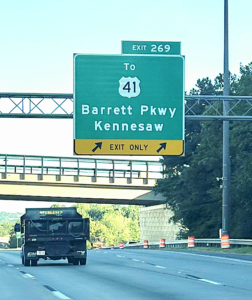
Crashes around I-75, I-575, Barrett Parkway, Chastain Road, and Cobb Parkway can involve multiple jurisdictions and businesses with possible video. Identifying the precise location and nearby cameras early can be as important as identifying the rideshare policy.
How Georgia's Fault Rules Can Affect a Rideshare Claim
Georgia follows a modified comparative fault rule under O.C.G.A. 51-12-33. A person who is less than 50 percent responsible may recover damages, but the award is reduced by that person's percentage of fault. A person who is 50 percent or more responsible cannot recover damages.
For a passenger, the main dispute is often how fault should be divided between the rideshare driver and another driver. For a driver, cyclist, or pedestrian, the insurer may also argue that the injured person contributed to the crash. Georgia law permits fault to be allocated among multiple responsible people and, in some circumstances, nonparties. That makes the early investigation especially important in multi-vehicle collisions.
The police officer's opinion can be useful evidence, but it does not end the civil analysis. All too often, insurance companies make a liability decision that is not supported by the investigating officer’s opinion. For example, I am working on a case right now where my client as driving straight on a four-lane road when a Lyft driver pulled out from a side street and hit him. The officer found the rideshare driver at fault and cited her. However, her insurance company completed its own investigation and is trying to assign twenty-five percent of the fault to my driver. I intend to rely on photographs of the damage, witness testimony, and physical evidence to help support the position that my client is not at fault.
What Compensation May Be Available?
The available damages depend on the injuries, the evidence, the law, and the insurance that applies. A rideshare policy does not change the basic categories of damage that may be considered in a Georgia injury claim. Depending on the facts, these losses may include:
- Past medical expenses and the reasonable cost of future care.
- Lost wages and diminished future earning capacity.
- Physical pain, emotional suffering, disability, scarring, and loss of enjoyment of life.
- The reasonable value of necessary help with household tasks or personal care.
- Property damage and other accident-related out-of-pocket losses.
No online calculator can determine the value of a rideshare injury claim from a few numbers. The extent and permanence of the injuries, the available insurance, fault, credibility, and the effect on the person's actual life all matter. Our blog on case value explains in detail how Georgia personal injury claims are evaluated.
How Long Do You Have to File a Rideshare Accident Lawsuit in Georgia?
For most Georgia personal injury actions, O.C.G.A. 9-3-33 requires a lawsuit to be filed within two years after the claim accrues. That is the general rule, not a calculation of the deadline in every case.
Shorter notice requirements can apply when a governmental entity is involved, and insurance policies can impose contractual notice or cooperation duties. A wrongful-death claim, a minor's claim, and other special circumstances can raise different issues. The deadline should be evaluated from the actual facts rather than assumed based on a single statute.
Two years is also much longer than some evidence lasts. Video can be overwritten. Phones are replaced. App screens change. Witnesses become harder to locate. A claimant should not wait until the filing deadline to begin preserving proof. Most vital evidence in a case will disappear within weeks, not years.
What Should a Rideshare Accident Lawyer Investigate?
A meaningful rideshare investigation should go beyond ordering the police report and sending a demand to the most obvious insurer. At a minimum, the lawyer should examine:
- The complete app timeline. Determine when the driver logged in, accepted the request, arrived, began the ride, and completed the transaction.
- Every potentially applicable policy. Obtain the rideshare liability policy, the driver's personal policy, the other driver's policy, and available UM/UIM policies.
- Fault evidence. Preserve video, interview witnesses, inspect the vehicles when appropriate, and obtain digital or vehicle data that may resolve disputed liability.
- The platform's own conduct. Evaluate any direct-negligence or statutory-compliance theory under Georgia's current rideshare law rather than relying on generic vicarious-liability language.
- The full human and financial loss. Medical records and bills matter, but so do work limitations, family responsibilities, hobbies, independence, future care, and the day-to-day consequences of the injury.
- Liens, health insurance, and repayment issues. The gross settlement number does not tell a client what will remain after valid liens, expenses, and fees are addressed.
A practical question to ask before hiring a lawyer Ask: "What evidence will you use to prove the driver's app status, and how will you identify every insurance policy that may apply?" A lawyer who treats the case as an ordinary collision may miss the coverage issue that makes the claim different.
Our Approach to Rideshare Accident Claims
Williams Elleby Howard & Easter is based in Kennesaw and represents injured people throughout Georgia. In a rideshare case, our job is to identify the correct coverage period, preserve the digital and physical evidence, determine who is legally responsible under current law, and document what the injuries have actually taken from the client.
We also look beyond the first insurance card or the most recognizable company name. That may mean reviewing the rideshare policy, the driver's personal policy, the other driver's coverage, and the client's own uninsured or underinsured motorist coverage. The goal is not to make the claim sound complicated. It is to make sure the investigation is complete.
We handle personal injury cases on a contingency-fee basis, which means there is no upfront attorney's fee and the fee is paid only if the case results in a recovery. The fee agreement and case expenses should always be explained before representation begins.
Frequently Asked Questions About Kennesaw Uber and Lyft Accident Claims
What insurance applies if the rideshare driver's app was off?
The driver's personal automobile policy is generally the starting point because the driver was not providing transportation network company services at that time. Coverage still depends on the policy terms and the facts of the crash.
What if the driver was logged in but had not accepted a ride?
The statutory minimum is $100,000 for bodily injury or death to all persons in one accident, with a maximum of $50,000 for one person, plus $50,000 for property damage. The driver's personal policy may exclude coverage while the driver is logged in.
Does the $1 million coverage begin only after the passenger gets into the car?
No. Under Georgia's statutory framework, the higher coverage period begins when the driver accepts the ride request and continues until the transaction or ride is complete, whichever is later. A crash on the way to pick up the passenger would fall within that period.
Does a $1 million policy mean the claim is worth $1 million?
No. A policy limit is the most the policy is contractually liable to pay for a covered occurrence; it is not an automatic settlement amount. Fault, causation, the severity of the injuries, the available evidence, competing claims, and other coverage all affect the outcome.
What if another driver caused the crash while I was an Uber or Lyft passenger?
The other driver's liability policy is usually an important source of recovery. During the accepted-ride period, the rideshare UM/UIM coverage may also apply if the at-fault driver has no insurance or not enough insurance, and other personal or household UM/UIM policies could come into play as well.
Can Uber or Lyft itself be sued after Georgia's 2025 law?
Possibly, but the theory matters. Georgia law generally blocks liability based only on the platform's ownership or operation of the app when the statutory conditions are met. Evidence of the platform's own negligence, criminal misconduct, or statutory noncompliance is required in order to sue a rideshare company in 2026.
Should I report the collision in the rideshare app?
Yes, a prompt factual report can help document the incident and trigger the platform's claims process. Save a copy or screenshot, avoid speculation, and do not sign a release or give broad medical authorization without understanding it.
Do I have to give an insurance company a recorded statement?
Do not assume every insurer is entitled to an immediate recorded interview. Your own policy may require cooperation, while another driver's or platform insurer may be seeking information to limit the claim. Get advice about the specific request rather than refusing all communication or answering without preparation.
What app evidence should I save?
Save the ride receipt, ride ID, timestamps, route, pickup and destination, driver profile, vehicle and plate information, messages, call logs, safety reports, and related emails. Screenshots are useful because the visible app record can change after the trip closes.
What if I was not a rideshare passenger?
You may still have a rideshare-related claim if an active Uber or Lyft driver hit your car, bicycle, or body. The driver's app status remains important because it determines which rideshare coverage period may apply.
Can I recover if I was partly at fault?
Possibly. Georgia generally allows recovery when the injured person is less than 50 percent responsible, but the damages are reduced by that person's percentage of fault. A person who is 50 percent or more responsible cannot recover damages.
How long do I have to file a lawsuit?
Most Georgia personal injury lawsuits must be filed within two years after the claim accrues, but exceptions and shorter notice requirements can apply. Evidence may disappear long before the filing deadline, so waiting to investigate can hurt the claim.
Talk With a Kennesaw Rideshare Accident Lawyer
A rideshare claim usually turns on a simple-sounding question: What was the driver doing in the app at the moment of the crash? Answering it can require trip records, policy documents, platform data, witness evidence, and a careful review of Georgia's current law.
If you were injured in an Uber or Lyft crash in Kennesaw or elsewhere in Georgia, Williams Elleby Howard & Easter can review the facts and explain the available options. Call 404-389-1035 or contact our Kennesaw office for a free consultation.

Jared Easter
Partner
Jared Easter is a partner at Williams Elleby Howard & Easter, representing individuals injured due to others’ negligence. Admitted to the State Bar of Georgia in 2012, he has dedicated his career to personal injury law, understanding all aspects of the claims process to maximize client recoveries. He has secured millions of dollars for clients in various personal injury matters and is admitted to practice in all Georgia trial courts, the Georgia Court of Appeals, and the U.S. District Court for the Northern District of Georgia.
Author's Bio