Video Chapters
- 00:00 Georgia eBike & Scooter Laws Explained
- 00:35 What Is an eBike? Understanding Georgia's 4 Classes
- 01:42 Where Can You Legally Ride an eBike?
- 03:30 Are eBikes Safe for Kids? What Parents Should Know
- 04:50 Who Is Liable If a Child Causes an eBike Accident?
- 06:09 Georgia's 28 MPH Rule: When an eBike Becomes a Motor Vehicle
- 06:22 Tips for Parents Before Buying an eBike
- 07:13 Final Takeaways on eBike Laws & Safety
Read Full Video Transcript
Georgia eBike & Electric Scooter Laws Explained
Welcome back to the Williams Elleby Howard & Easter YouTube channel. I'm Joel and this is Jared. Today we want to talk all things e-bikes, scooters, and alternative transportation when it comes to the laws in the state of Georgia. What's required? Because I think we've all experienced, at least if you live in suburban areas like Kennesaw like we do, situations where a 12-year-old or a kid comes flying around on some sort of a dirt bike or scooter or e-bike or some sort of thing and you're wondering how is that even legal, right? Sometimes it is, sometimes it's not. So those are the kinds of things we're going to get into today.
What Is an E-Bike Under Georgia Law?
Yeah. So I think the best place to start is what is an e-bike? You know, we all hear about them. I think if you have kids, they're probably asking you to buy them one. They vary in prices, but essentially, under the law, they break down into three categories. Two of the categories, category 1 and 2, involve vehicles that either do or don't have pedals and go under 20 miles an hour. So, that can either be one that doesn't have pedals and it's just a throttle that will take it up to 20 mph or there are some that have pedals that are—they're called pedal-assisted—that you can pedal. If you get tired, you hit the button; it takes you to 20 mph. There's a third category that goes up to 28 mph. Not much of a difference there. Still the same concept. And then there's a fourth class, which is everything above 28 mph. And everything above 28 mph, at least in Georgia, is not considered an e-bike. It's basically put into the category of a motor vehicle. So, it's subject to the same, you know, licensing, helmet, registration, tags, all of those requirements to be able to be ridden on the road. So, if you're a parent and you're thinking about buying your kid an alternative vehicle, an e-bike or a dirt bike or anything of that nature, if it goes more than 28 mph, you need to think extra carefully about whether your child, if they're 13 years old or 12 years old or even 14 years old, can legally operate that thing on Georgia roads.
Where Can E-Bikes and Electric Scooters Be Ridden in Georgia?
Yeah. And I think, uh, at least in my neighborhood, it presents this really weird question and a balancing act of: so you buy it, you buy your son or daughter one, where do they ride it? If you, you know, do you ride on the sidewalk? Do they ride in the road? Do they ride in the yard? Is there common places in the neighborhood where they might try to ride them? News flash, no neighborhood wants them riding in common areas. I can promise you. So that's a surefire way to get everyone all up in arms. But I think it is a real consideration of, yeah, they seem really cool, but where are you going to ride them? Because technically they — pretty much all of the categories fall into either they're a bicycle or they're a motor vehicle. Contrary to what most people think, neither a bicycle nor a motor vehicle can be driven or ridden on the sidewalk. So, you know, technically bicycles should be ridden on the road following the rules of the road. So, if you are going to buy your child one, be prepared for that kind of question in your mind of, do I want my child riding on the road? Do I have a neighborhood where it's allowed? Do I have a neighborhood where I feel safe doing it? And can my kids follow the rules of the road? That's probably the most important question. You know, will they stop at a stop sign or will they pull out in front of somebody and, unfortunately, get run over?
Safety Considerations for Parents and Young Riders
Yeah. And it's a question that we have to ask ourselves a lot. And it's a question that somebody like myself or Jared that both grew up in very rural areas of the world. For Jared, it was East Tennessee in some holler somewhere. I don't even know. But for me, it was a dirt road in southwest Georgia and nobody cared. Like, you jump on your four-wheeler, you jump on your—we had three-wheelers when I was a kid. Those are real death traps. Yeah. But you just go and have fun and break bones and whatever and it is what it is. But when you're living in a metropolitan area and your kid's out on a street that has cars constantly going on it, you really have to think about those things. Number one, like Jared said, if it is a bike or a, you know, an alternative vehicle that goes under 28 mph, you know, a regular bicycle or a scooter or an e-bike, do they have the discipline and the common sense to follow the rules of the road there? And where you live, are you comfortable with them riding that apparatus on the road as opposed to the sidewalk? Because there's some roads where my 14-year-old daughter could get on a bicycle and legally ride it, but I would be extremely uncomfortable with her doing that, especially with people using cell phones and all now.
Liability When a Child Rides a Vehicle Over 28 MPH
But you also have to think about it from a liability perspective. What if you were to buy your child a motor vehicle that goes over 28 mph and they hit somebody and hurt them? Who's at fault in that situation?
Potential Parent and Homeowners Insurance Liability
Jared, that's interesting. And I think it's developing a lot right now in terms of where that liability falls. Likely, depending on the circumstances, but if your kid's flying down the sidewalk, I think that's strike one. They're on the sidewalk when they should have been on the road. If they're going fast or they're in an area where they're not supposed to be and they hit someone and hurt them. I think first and foremost, obviously, it's not an insured vehicle, so no car insurance or anything like that would cover it, but you as the parent could have some liability there. I think, um, you know, you purchased it, you gave it to them. Obviously, if they're 12, 13, or 14, you have authority over where they are and what they're doing. I think it gets worse if there's been previous incidents or complaints or issues to where it starts to stack up to create, you know, this idea of ongoing negligence that you're going to be responsible for and likely fall back to homeowners insurance, I guess, would be the next place. So, if your kid goes out and runs somebody over, very likely you're going to have a claim against your homeowner's insurance in the near future.
Key Takeaways for Georgia E-Bike and Scooter Laws
Yeah. And all in all, just remember in the state of Georgia, if the vehicle will go over 28 mph, it is considered a motor vehicle. And if your child isn't a licensed driver, they probably should not under the law be driving that to begin with. Practically speaking, you have to really know your child and know their ability to follow the rules and whether they will follow the rules, especially when you're not looking over their shoulder when they're riding the e-bike down the road, and also to inform them of what the laws are and what's expected because there are places there's dirt bike tracks that you can take your kid and pay $20, $50 bucks, whatever, and go to town, have fun with it. But, uh, in neighborhoods, it's not always the best or safest place to do it. So just be careful so you don't expose yourself to liability for something that your child does or something that you have done by providing your child with a motor vehicle that could expose you to liability or hurt somebody or them in the future.
Georgia E-Bike Laws Are Still Developing
Anything else about scooters, e-bikes, motor vehicles? No, I think that's it for now. We'll see what happens over time because it's still developing every day. That's right.
Final Thoughts
All right. Well, we appreciate you spending some time and watching this video with us today. Hopefully, it's been helpful. If so, give us a thumbs up, hit that like button, and we will see you in a couple of weeks. As personal injury lawyers, we love what we do, and we're happy to share the experience we've gained in personal injury law. To help our family, friends, and YouTube subscribers, we've shared over 300 personal injury videos covering various injury topics. So, if you'd like to gain more knowledge that may help protect yourself or a loved one when they're on the roads or out in public, check out our channel or view our playlist of shorts for quick personal injury tips.
Georgia E-Bike Laws: What Riders and Parents Need to Know
Quick Answer: What are the laws for electric bikes and electric scooters in Georgia?
Georgia recognizes three classes of electric assisted bicycles. A qualifying e-bike must have working pedals, a saddle, two or three wheels, and a motor of no more than 750 watts. The class affects where it may be ridden, and Class 3 operators must be at least 15. Helmets are required for everyone on a Class 3 and for younger riders under the bicycle helmet law. Sidewalks are generally off-limits, with a limited local-option exception for children. Parents are not automatically liable for a child's collision, and homeowners insurance is not automatic protection. Start with the actual bike, the rider and the route.
A child wants an e-bike. The advertisement says it is fast, easy to ride and perfect for the neighborhood. Before buying it, a parent needs an answer to a less exciting question: Where is the child actually going to ride?
That is the practical problem Joel and I discuss in the accompanying video. A machine can look like a bicycle without fitting Georgia's bicycle rules. And a road can be legally available without being a sensible place for a particular child.
What counts as an e-bike under Georgia law?
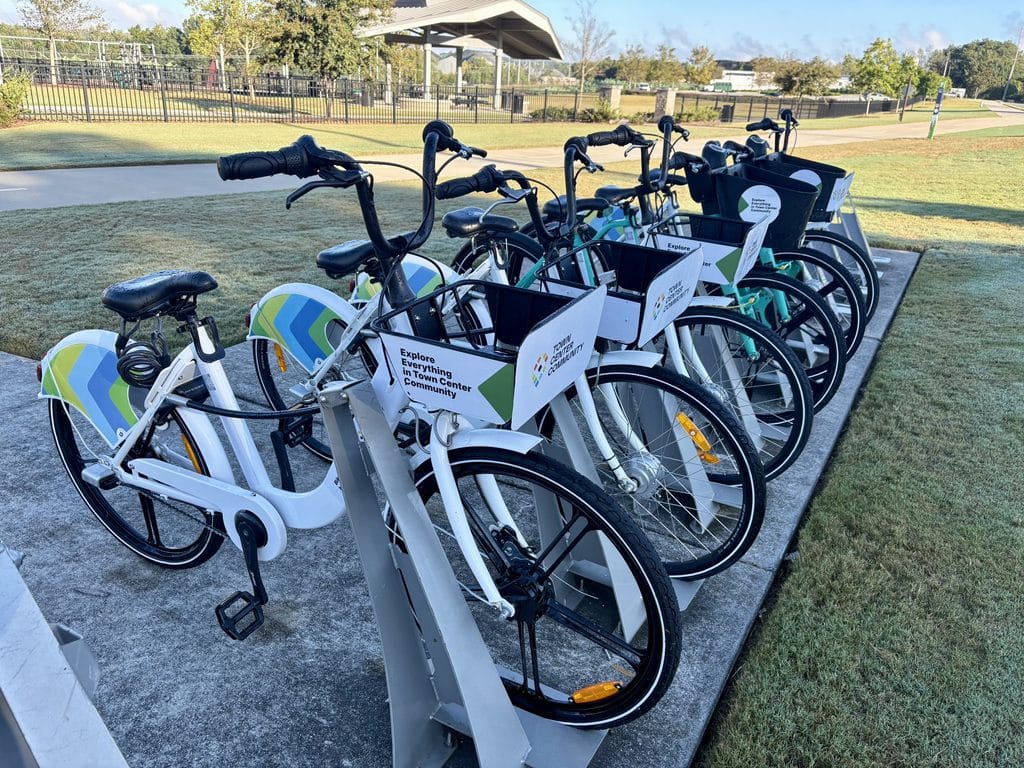
Georgia's legal term is electric assisted bicycle. Under O.C.G.A. § 40-1-1(15.3), it must have two or three wheels, a saddle, fully operative pedals for human propulsion, and an electric motor of no more than 750 watts. All of those features matter.
A throttle does not eliminate the pedal requirement. A scooter without pedals does not become an e-bike simply because it travels slowly. And decorative pedals that cannot propel the machine do not satisfy the requirement for fully operative pedals.
The motor's wattage describes its power, not its speed. Ask the seller for the actual specifications rather than relying on a product name or a general statement that the machine is "street legal."
Georgia recognizes three classes of e-bike categories
The classes appear in O.C.G.A. § 40-6-300. Each must satisfy the basic definition above.
| Class | How the motor works | Georgia's speed language |
| 1 | Assistance only while the rider pedals. | Assistance stops when the bike reaches 20 mph. |
| 2 | The motor may propel the bike without pedaling, but working pedals are still required. | The statute says the bike is "not capable of reaching a speed of 20 miles per hour." |
| 3 | Assistance only while the rider pedals. | Assistance stops when the bike reaches 28 mph. |
Class 2 deserves special attention. It is often discussed as a 20-mph category, but Georgia's actual wording is narrower. Do not substitute a retailer's shorthand for the statutory language when evaluating a particular model.
For Classes 1 and 3, the cutoffs address motor assistance. They are not a rule that turns a bicycle into a motorcycle the instant it coasts downhill past 28 mph. Conversely, a machine does not qualify for Class 3 merely because its owner promises to keep it below 28.
Bikes manufactured on or after January 1, 2020, must carry a permanent label identifying the class, motor wattage and top assisted speed. A person who modifies a bike to change its class is responsible for updating the label. Those rules appear in O.C.G.A. § 40-6-302. A new sticker does not make an otherwise noncompliant machine legal.
Faster machines and scooters require a separate classification
A machine that exceeds the power limit, lacks working pedals or does not fit a statutory class cannot simply be treated as a lawful e-bike. Its design and operating capabilities must be evaluated under Georgia's other vehicle definitions.
Do not assume every such machine has identical licensing, registration and insurance requirements. For example, the Georgia Department of Driver Services' moped rules require an appropriate license or permit but do not require a tag. That does not mean every small electric machine is a moped; it must actually meet that separate definition.
An electric dirt bike or scooter should therefore be evaluated on its own specifications. Buying it, adding pedals or selecting a slower setting does not, by itself, answer whether it may legally be used on a public road.
Where can you legally ride an e-bike?
The answer depends on the class and the location. Georgia generally gives qualifying e-bike riders the rights and duties of bicycle riders, with specific exceptions. That is the starting point under O.C.G.A. § 40-6-301, not permission to ride everywhere.
Roads: Bicycle rights come with bicycle responsibilities
A qualifying e-bike may use roads where bicycles are permitted, subject to applicable restrictions. The rider must obey traffic laws, including stop signs and traffic signals. See O.C.G.A. § 40-6-291.
Bicycle riders generally must stay as near the right side as practicable, but the law recognizes exceptions for hazards, narrow lanes, left turns and other specified circumstances. It does not require someone to squeeze against a dangerous pavement edge. The exceptions are in O.C.G.A. § 40-6-294.
Drivers also have responsibilities. O.C.G.A. § 40-6-56 requires due caution when passing a bicycle. When possible, the driver must move into a lane that is not adjacent to the bicycle. When that cannot legally and safely be done, the statute requires reduced speed and at least three feet of clearance; three feet is not a substitute for the entire rule.
Sidewalks: There is a limited local exception for children
Georgia generally prohibits driving a vehicle on a sidewalk except when crossing an authorized driveway. But O.C.G.A. § 40-6-144 allows a local government, by ordinance or resolution, to permit bicycle riding on sidewalks by children age 12 or younger.
That is not an automatic statewide exception for every child. Check whether the local government has adopted it and whether its wording covers the particular qualifying e-bike. A parent's belief that the sidewalk feels safer does not create permission.
Bicycle paths and shared-use paths: Class matters
Under O.C.G.A. § 40-6-303(a), Class 1 and Class 2 e-bikes may generally use bicycle paths and shared-use paths where bicycles are allowed. However, a local authority or state agency may prohibit them.
Class 3 is different. It generally may not use those paths unless the path is within or adjacent to a highway, or the responsible local authority or state agency permits Class 3 use.
Natural-surface trails have a separate rule. For trails made from native soil without added surfacing materials and designated for nonmotorized use, the responsible authority controls which e-bike classes, if any, may use them. A trail that permits conventional mountain bikes is not automatically open to every e-bike.
Check the actual route's rules before riding. Do not assume that a wide sidewalk is a designated shared-use path, or that permission on one trail carries over to the next.
Neighborhoods: First identify who controls the space
A neighborhood street, a public sidewalk and an association-owned common area are not interchangeable. Before assuming permission, identify the property and check the applicable public rules, posted restrictions and, for private common property, the governing documents and owner's rules.
The video's concern about common areas is practical advice, not a statement that every homeowners association prohibits riding. This article does not determine the authority of a particular association or interpret its covenants.
Currently, most established neighborhoods have no clearly defined rules governing the use of e-bikes as it is a relatively new issue. I am the President of my homeowners association and our covenants do not contemplate this issue at all. I am currently struggling with how to address it while striking a fair balance. The parents who purchase e-bikes for their children support allowing them to be ridden within the neighborhood, while other residents do not. This has created a great deal of confusion as to where these bikes can be ridden and has led to a number of conflicts amongst residents. My advice is to check with the neighborhood association directly before assuming that it is legal to ride on association-owned property because the rules vary widely. For example, my neighborhood has only banned the use on association owned property, while the adjoining neighborhood is attempting to ban them from use on association property as well as sidewalks.
Can children ride e-bikes, and who needs a helmet?
Georgia prohibits anyone under 15 from operating a Class 3 e-bike. A younger child may ride as a passenger on a Class 3 designed to carry passengers. Everyone operating or riding as a passenger on a Class 3 must wear the properly fitted, fastened helmet required by O.C.G.A. § 40-6-303(b)-(c).
The state e-bike provisions do not set that same minimum operating age for Class 1 and Class 2. However, that does not mean every child is ready to ride one. The route, the manufacturer's restrictions, and the child's actual ability still need attention.
For Class 1 and Class 2, Georgia's bicycle helmet law generally requires a helmet for riders and passengers under 16 on the public roads, bicycle paths, lanes, and sidewalks covered by the statute. See O.C.G.A. § 40-6-296(d). My practical recommendation is to wear a properly fitted helmet on every ride, even when age does not make it mandatory.
Equipment matters too. Georgia requires a functioning brake and, at night, a white front light visible from 300 feet and either a red rear light visible from 300 feet or an approved red rear reflector. Class 3 e-bikes also need a speedometer. See the bicycle equipment requirements and the e-bike equipment statute.
Before buying, decide where your child will ride
The legal minimum is not a parenting recommendation. I would begin with the route, not the bike's advertised top speed.
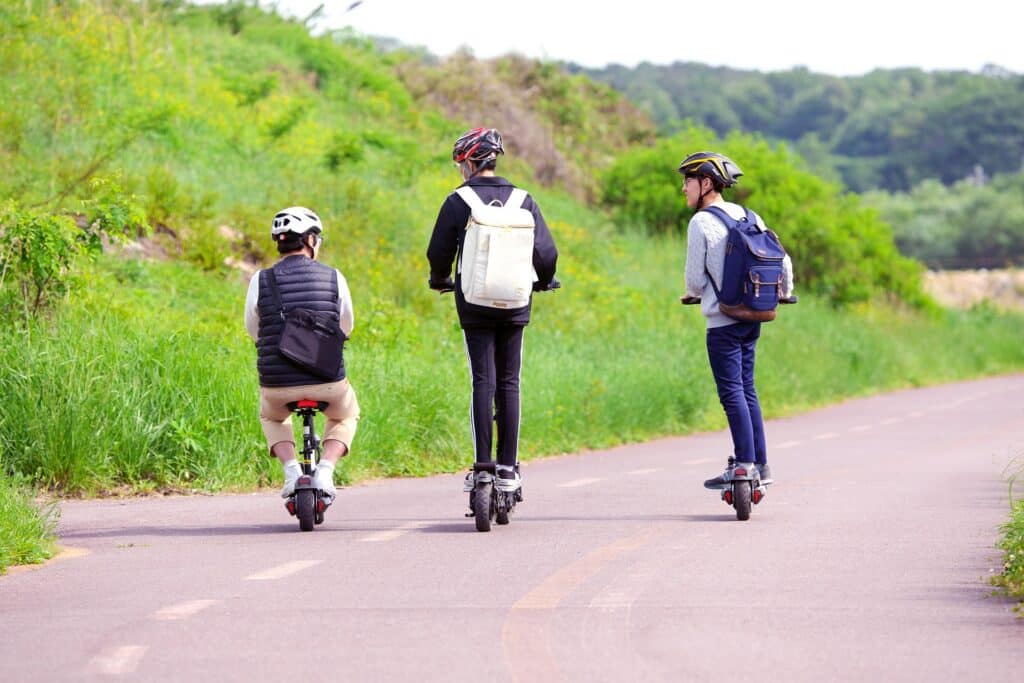
In the video, Joel describes growing up around dirt roads in southwest Georgia, and we discuss my East Tennessee upbringing. The point is not that our childhood experiences settle today's question. They do not tell a parent whether a particular child can handle a particular street.
A useful pre-purchase check is to work through four questions:
- What exactly am I buying? Read the label, manual and specifications. Confirm the class, working pedals, motor power and available operating modes.
- Where will it be used? Check the entire route, including crossings and the trip back. Identify the rule for each road, sidewalk, path or private area.
- Can this child manage that route? Watch the child stop, look for traffic, control speed, and respond to an unexpected situation. Set boundaries before handing over the bike.
- What protection is actually in place? Confirm equipment, supervision and insurance in writing. Permission to ride does not answer those separate questions.
- In my spare time, I help coach a mountain biking team. While my kids are not riding e-bikes, I get a first-hand look at kids’ behaviors on a bike. Witnessing this has taught me one very important lesson- there is no one-size-fits-all approach to predicting whether a child can handle the responsibility that comes with riding an e-bike. I have kids on my team who are extremely cautious and make it a point to learn every rule and act accordingly. I have other kids on my team who have one sole goal and that it to go as fast as humanly possible. These kids throw caution to the wind, never stop at a single crossing, and refuse to believe that anything bad could ever happen to them. I bring this up to reiterate that, as a parent, you must be honest with yourself about the type of child that you have and whether they can handle the responsibility that comes with entrusting them with this type of bike.
These are practical suggestions, not a claim that a checklist prevents every collision. A parent can also decide that an otherwise legal machine or route is not appropriate yet.
Are parents liable if a child injures someone?
Not automatically. Georgia does not make a parent responsible for every negligent act simply because the person who caused the injury is the parent's child. But a parent's own conduct can support a claim in appropriate circumstances. Sowell v. Solomon, 362 Ga. App. 717 (2022), explains that distinction.
One possible theory is negligent entrustment: making equipment available to a child under circumstances in which harmful misuse is reasonably foreseeable. Another is negligent supervision, where the parent's failure to use appropriate care in supervising or controlling the child foreseeably contributes to the injury. The evidence and circumstances matter.
A Georgia bicycle case shows why the answer is not automatic
In Sowell, a 10-year-old riding an ordinary bicycle was involved in a fatal collision with an adult cyclist. The Court of Appeals held that the parents were entitled to judgment without a trial on the parental-negligence claims. The record showed safety instruction, years of riding without an accident of this kind, and insufficient evidence that the parents should have anticipated the injury.
The case involved an ordinary bicycle, not an e-bike. It does not resolve every e-bike situation, but it shows why a parent-child relationship alone is not enough to establish liability. See Sowell, divisions 2-3.
A parent's knowledge of repeated dangerous riding, specific warnings, or an unsuitable machine may change the analysis. Lack of an earlier collision is not an automatic defense either. Georgia also prohibits parents and guardians from authorizing or knowingly permitting a child's violation of the bicycle provisions. See O.C.G.A. § 40-6-297. A civil damages claim still needs its own legal and factual analysis.
Will homeowners or auto insurance cover an e-bike collision?
Do not assume either answer. Legal responsibility and insurance coverage are different questions. A person can face a claim even when an insurer disputes coverage.
Insurers' own explanations illustrate the problem. Progressive and Allstate describe policy-dependent treatment of e-bikes and possible gaps in ordinary homeowners or renters coverage. A policy's definition of a motorized vehicle may not match Georgia's traffic-law definition of an e-bike.
Coverage for a stolen bike is also not necessarily coverage for injuries the rider causes. The actual policy, exclusions and endorsements must be read before anyone promises protection.
Before buying, send the insurance agent the make, model, wattage, class, operating modes and proposed rider's age. Ask specifically about liability for an injury caused away from home. Ask about modifications and whether separate e-bike coverage is needed. Keep the written response and policy documents.
Auto coverage should not be dismissed simply because the injured person was on a bicycle. Depending on the collision, a motorist's liability coverage or applicable uninsured-motorist coverage may matter. Georgia's uninsured-motorist statute recognizes certain insured people outside a covered vehicle, but the facts and policy still control the available protection.
What matters after an e-bike crash?
The investigation should establish what happened, what kind of machine was involved and which rules applied at the location. Calling something an e-bike does not establish its legal classification or decide fault.
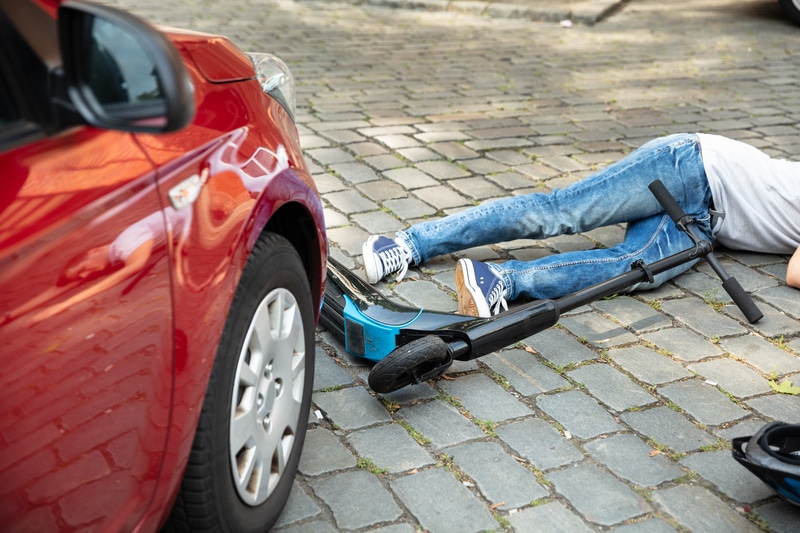
For ordinary negligence claims, Georgia's comparative-fault statute generally reduces recovery by the injured person's percentage of fault and bars recovery at 50 percent or more. Claims involving children require additional analysis; do not simply apply adult assumptions to a child's conduct.
There is also an important helmet qualification. Georgia's bicycle and Class 3 helmet provisions expressly restrict using a violation as evidence of negligence or liability. It is therefore wrong to assume that a missing helmet automatically defeats an injury claim. See O.C.G.A. § 40-6-296(d)(5) and section 40-6-303(c)(5).
Preserve the evidence that identifies the bike and the collision
Your safety comes first. Seek emergency help when needed. Do not remain in traffic or handle unsafe equipment merely to collect evidence.
Once safe, preserve the following:
- The scene and witnesses. Keep original photographs and video, witness contact information, the precise location and photographs of signs, crossings and sight obstructions.
- The machine as it was. Preserve the bike, its label and serial number, manual, sales listing, and purchase records. Record existing settings without changing them. Avoid repairs, unlocking, resets, or software changes until preservation needs have been addressed.
- Related records. Keep relevant app information if it exists, communications about the bike or incident, insurance documents, and any earlier safety complaints. Do not delete unfavorable material.
- The injury and its effects. Keep treatment records, bills, and documentation of missed work. Record what happened while you remember it, separating what you personally saw from what someone later told you.
The point is not to collect every possible file yourself. It is to avoid losing the information needed to test both sides' accounts.
I represented the family of a six-year-old boy who was struck by a car while riding an e-bike in his neighborhood. Initially, the driver of the car claimed that the boy failed to stop at a stop sign and rode out in front of him. However, the boy’s father knocked on his neighbor’s doors around the crash site and was able to locate surveillance footage that showed the crash. The footage quickly proved that the driver was lying and told the officer a completely fake story about how the wreck happened. It turned out that it was the driver who had the stop sign, and he failed to stop before hitting the boy. This is a prime example of how collecting evidence at the scene can make all of the difference in your injury case.
Frequently asked questions about Georgia e-bike laws
Do I need a driver's license or license plate for a qualifying e-bike?
No, a compliant electric assisted bicycle is excluded from Georgia's motor-vehicle definition and receives bicycle treatment. That distinguishes it from the machines subject to the motor-vehicle driver's-license and registration requirements. Confirm that the actual machine qualifies under O.C.G.A. § 40-1-1, rather than relying on its advertisement.
Can my 14-year-old operate a Class 3 if I ride alongside?
No. The statutory prohibition on Class 3 operation by someone under 15 does not contain a parent-supervision exception. A younger child may be a passenger on a Class 3 designed for passengers, subject to the helmet and passenger rules.
Can someone ride on the rear rack or handlebars?
Not merely because there is room. Georgia limits a bicycle to the number of people for which it is designed and equipped, and prohibits a passenger on the handlebars. Young children have additional seating and transport requirements under O.C.G.A. § 40-6-292.
Does switching the motor off let me use any bicycle trail?
Do not assume so. Georgia's access rules distinguish types of bicycles and leave important decisions to the authority responsible for the path or trail. Check the actual restriction rather than assuming that temporarily disabling assistance changes the machine's permitted access under O.C.G.A. § 40-6-303.
Does a 750-watt label prove the bike is legal?
No. Wattage is only one requirement; the machine also needs the required physical features and must fit one of the three statutory classes. Compare the label and actual operation with the definition and class requirements, especially after modifications.
Can I unlock the bike's speed and just promise to ride slowly?
That promise does not resolve compliance. The class definitions address the machine's motor operation and capabilities, not merely the speed chosen on one ride. Georgia's labeling statute also places responsibility on a person who modifies a bike to change its class.
May I move away from the curb to avoid parked cars?
Yes, when a statutory exception applies. Georgia recognizes opening car doors, stopped vehicles and other hazards, as well as lanes too narrow to share safely, as reasons the usual right-side rule may not control. Riders must still exercise reasonable care under O.C.G.A. § 40-6-294.
Does a police report's description settle whether it was an e-bike?
No. Legal classification depends on the machine's features and operation under Georgia's definition and three-class law. Preserve the label, specifications and machine itself so the description can be checked against the evidence.
Can an injured person sue a child under 13 personally?
Generally, no: Georgia treats children under 13 as immune from tort liability, meaning civil liability for a wrong such as negligence. Sowell distinguishes that rule from claims based on the parents' own negligence. Have counsel evaluate the child's age and the available claims rather than assuming the child's and parents' liability are identical.
If the parents are not liable, does that mean there is no insurance?
Not necessarily. A liability decision about one person does not identify every insured person, policy or potentially responsible party. The available coverage needs a separate review of policy terms and exclusions, the collision and the legal claims.
How long do I have to bring an injury claim?
Georgia generally gives two years to bring a personal-injury action under O.C.G.A. § 9-3-33, but exceptions and separate notice requirements can matter. For example, a claim against a city generally requires written notice within six months under O.C.G.A. § 36-33-5. Do not treat the general filing deadline as permission to postpone preserving evidence.
Does an injured child's age extend every deadline?
No. O.C.G.A. § 9-3-90(b) can pause the ordinary statute of limitations period for a minor's claim, but it does not extend every notice requirement. In Dates v. City of Atlanta (2025), the Georgia Supreme Court held that minority tolling does not extend the municipal claim-notice deadline. A child's case needs an early, claim-specific deadline review.
Injured in an e-bike collision?
Before buying an e-bike, identify the machine and the route. After a collision, preserve the evidence before changing the bike or assuming that a particular insurance policy will respond.
If you or a family member has been injured in an e-bike collision, call Williams Elleby Howard & Easter at (404) 389-1035 or use our online contact form to request a free consultation about the incident and the available next steps.