What should I do if a distracted driver causes a crash in Kennesaw?
If a distracted driver causes a Kennesaw crash, get appropriate medical care and preserve evidence immediately. A strong Georgia distracted driving claim may depend on cell phone records, app data, vehicle telemetry, original digital photos, video, witness testimony, and the crash report. Do not assume the police report will identify distraction; electronic evidence can disappear or become harder to obtain with time.
Distracted driving cases are different from ordinary rear-end or intersection cases for one simple reason: the most important evidence is often invisible at the scene. A driver can put a phone down before the officer arrives. A crash report may say nothing about texting. An insurance adjuster may deny distraction entirely. The legal question becomes not only whether the driver was distracted, but how you can prove it.
"Since the COVID-19 pandemic, I have represented many more clients who were injured in car accidents caused by distracted drivers. The most common source of distraction is a cell phone. Cell phones allow us to text, email, play games, scroll social media, and so much more. I am concerned that there has been a culture shift and young drivers who grew up with cell phones readily available often fail to appreciate the dangers they can cause on Kennesaw roadways. Additionally, more people work remotely and feel the need to respond to emails and complete work tasks at the same time as they are driving around Kennesaw during traditional working hours." - Joel Williams
That observation is grounded in what I see around our Kennesaw office every day. Williams Elleby Howard & Easter’s primary office is located near the intersection of Cobb Parkway and Acworth Due West Road. I travel through that intersection nearly every day and see other drivers holding their phones while failing to look at the traffic light when it turns red. I’ve seen pedestrians in crosswalks jump out of the way of vehicles driven by someone holding their phone. Oftentimes, I hear emergency response vehicles speeding toward that intersection in response to a terrible crash. Sadly, many distracted drivers don’t fully appreciate the dangers they pose to themselves and others until it is too late.
Key Takeaways
- Georgia law requires drivers to exercise due care and generally prohibits physically holding or supporting a phone while operating a vehicle.
- A distracted-driving case can be strong even when the crash report does not identify distraction. Police-reported data often undercounts phone involvement because independent proof may not be available at the scene.
- Cell-phone records can establish timing, but the most useful evidence may also come from the phone itself, apps, vehicle event data recorders, telematics, dash cameras, surveillance video, and original photo metadata.
- Kennesaw has high-volume corridors where a few seconds of inattention can matter, including Cobb Parkway (US 41) at Barrett Parkway, Chastain Road near Kennesaw State University, and the I-75 interchanges.
- Georgia comparative-fault rules can reduce or bar recovery, so evidence should address not only the other driver's distraction but also any attempt to shift blame to the injured person.
- A Hands-Free Law violation can be powerful evidence, but it does not automatically prove every element of a civil case or automatically justify punitive damages.
- The general Georgia limitation period for a personal-injury claim is two years, but evidence preservation should begin far sooner.
Why Distracted Driving Matters in Kennesaw
A Georgia Department of Transportation crash-dashboard query cited by our firm in July 2026 identified 5,136 motor-vehicle crashes in Kennesaw from 2021 through 2025, including 1,536 injury-involved crashes and 7 fatal crashes. Those numbers describe all reported crashes, not just distracted-driving crashes, but they show the volume of collision activity in a relatively compact city. GDOT also allows users to filter its five-year dashboard for distracted-driver-related crashes by city or county.
The intersection of Cobb Parkway (US 41) and Barrett Parkway deserves particular attention.GDOT currently lists a reconstruction project at that intersection that would add another left-turn lane to both the northbound and southbound US 41 approaches. That project is not proof that distraction caused any particular crash, but it is an objective indicator of the turning movements and traffic-management demands at the intersection.
"As a personal injury car wreck lawyer who lives and works in Cobb County, I have seen firsthand how perilous intersections like the one at Cobb Parkway and Barrett Parkway can be when drivers are distracted and not paying attention to their surroundings." - Joel Williams
Kennesaw State University also adds substantial daily travel demand near Chastain Road and the I-75 corridor. KSU reported 51,375 students for Fall 2025, and its 2025-2026 Common Data Set reports that 87% of undergraduates live off campus or commute. That does not mean every student drives, but it helps explain why roads around the Kennesaw campus can experience heavy daily movement by commuters, students, employees, rideshare vehicles, delivery drivers, and visitors.
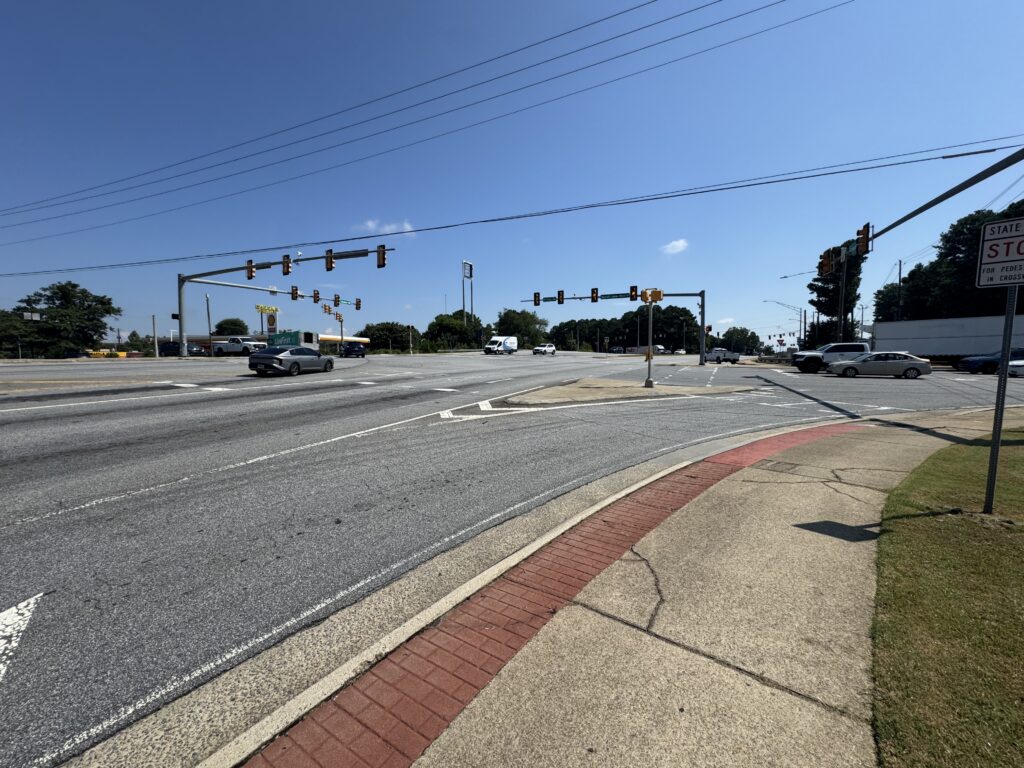
By way of example, let’s look at where Chastain Road intersects with Frey Road and Barrett Lakes Boulevard near Kennesaw State University. That intersection has no less than four crosswalks that are commonly utilized by Kennesaw State University students walking to and from campus. It is also less than 400 feet from on and off ramps to Interstate 75. Viewing the intersection as a whole, there are 9 turn lanes. With so many turn lanes and crosswalks so close to Interstate-75, drivers must be alert or tragedies are bound to occur.
Georgia Data Shows Why the Problem Is Hard to Measure
Georgia's own traffic-safety data makes an important point for injured people: distraction is common, but it is also difficult to prove from a crash report alone. The Governor's Office of Highway Safety reports that 14.7% of drivers observed in a 2024 statewide survey showed some visible form of distraction. In 2023, 55% of Georgia traffic crashes fit the state's criteria for having at least one confirmed or suspected distracted driver, and 34% of serious-injury crashes involved at least one confirmed or suspected distracted driver. Those categories include suspected distraction, so they should not be read as proof that distraction caused 55% of crashes.
The data also explains why digital evidence matters. Georgia safety researchers caution that distracted driving is underreported because post-crash investigators often lack firm evidence. The Insurance Institute for Highway Safety makes a similar point: police crash data likely understates cellphone involvement because drivers do not always volunteer that they were using a phone and officers may have no independent proof at the scene.
Crash type matters too. In Georgia's 2023 data, rear-end collisions were the most common crash type involving a confirmed distracted driver on higher-capacity roads. Rear-end crashes accounted for 64% of confirmed distracted-driver collisions on interstates and 72% on principal arterials. That pattern is relevant to Kennesaw corridors such as I-75 and major multilane roads, although the statewide percentages should not be treated as Kennesaw-specific statistics.
What Georgia's Hands-Free Law Actually Prohibits
O.C.G.A. § 40-6-241 requires drivers to exercise due care and prohibits many forms of handheld device use while operating a vehicle. In general, a driver may not physically hold or support a wireless device, write/send/read text-based communications, watch video, or record/broadcast video, subject to statutory exceptions. Hands-free and properly mounted uses are treated differently under the statute.
The statute is broader than "no texting." O.C.G.A. Section 40-6-241(b) requires a driver to exercise due care and not engage in actions that distract from safe operation. Subsection (c) then imposes specific restrictions on wireless telecommunications devices and stand-alone electronic devices. The Georgia Department of Driver Services summarizes the law as applying to drivers of any age and license type and lists escalating fines and license points for repeat convictions.
- First conviction: up to $50 and 1 point.
- Second qualifying conviction within the statutory period: up to $100 and 2 points.
- Third or subsequent qualifying conviction within the statutory period: up to $150 and 3 points.
The law also contains exceptions, including emergency reporting and use while a vehicle is lawfully parked. Whether a particular use violates the statute depends on the facts, so a civil case should not be reduced to a citation alone.
How Does a Kennesaw Accident Lawyer Prove Distracted Driving
The strongest proof often comes from multiple sources that corroborate one another: carrier records, lawful phone or app data, vehicle telemetry, event data recorders, dash cameras, surveillance video, original digital photographs, witness testimony, admissions, and the crash report. Timing is critical because some electronic or video evidence may be overwritten or become harder to obtain.
1. Cell-Phone Records and the Timing of Calls or Messages
A carrier record can sometimes establish that a call, text transmission, or data session occurred close to the time of a crash.But a phone bill is not a magic answer. Carrier records may show timing and routing information without revealing the content of a message or exactly what appeared on a driver's screen. The records still have to be matched to the crash time and evaluated with other evidence.
That distinction matters because distracted drivers frequently deny phone use. In a prior tractor-trailer case I wrote about publicly, the driver, employer, and insurer initially denied that the driver was texting. After suit was filed, the driver's cellular-provider records showed an extended text-message conversation during the trip and at the time of the collision. Comparing the crash time to those records changed the evidentiary picture of the case.
Certainly, cell phone usage leads to distracted driving in cases that do not require us to deal with denials of usage from the at-fault driver or his or her insurer. For example, in a recent Acworth driving case I handled, the police report stated that the at-fault driver was using a cellphone, failed to stop for traffic ahead, rear-ended the vehicle in front, and was cited for a hands-free violation under O.C.G.A. § 40-6-241(C).
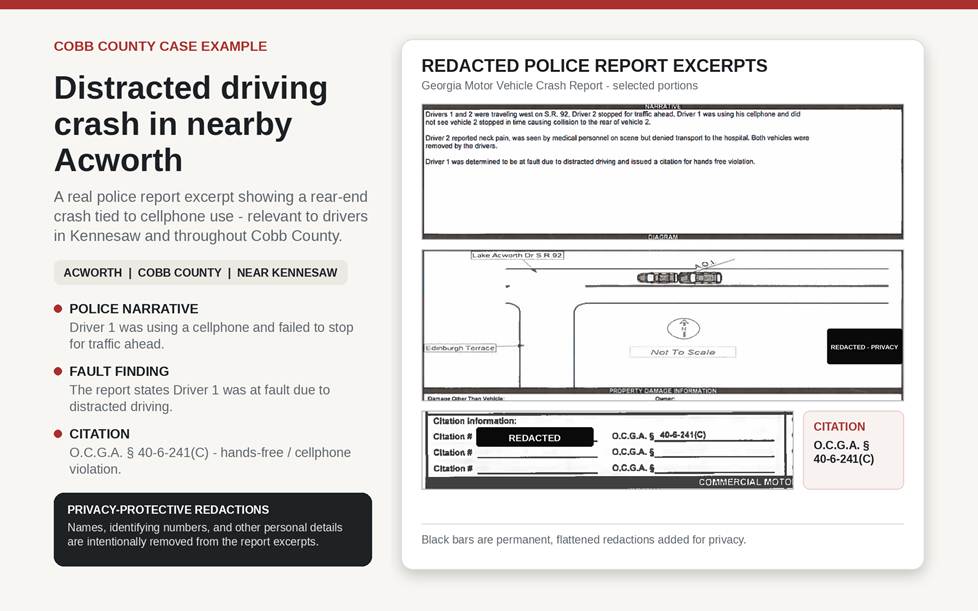
I helped the victim by using the police investigation and citation to establish clear liability, document the victim's injuries and losses, and emphasize the aggravating nature of the cellphone use during settlement negotiations. The case ultimately resolved for a confidential substantial amount that was higher than I typically see in similar rear-end collisions because the distracted-driving conduct made the claim more serious.
2. The Phone Itself, Apps, and Telematics
When legally obtainable and relevant, device or app data can provide a more detailed timeline than ordinary carrier records. Depending on the facts and available data, that may include screen activity, app usage, location information, driving-event data, or employer fleet information. The availability, retention, authentication, and discoverability of any particular dataset should be evaluated case by case.
"Data from apps like Life360 can help attorneys understand a driver's unsafe driving habits because they record things like hard braking, sudden acceleration, and speeding." - Joel Williams
Modern insurance telematics is another potential source. A 2026 IIHS analysis of insurer safe-driving app data found that, on limited-access roads, phone handling increased as drivers exceeded the speed limit. The practical litigation lesson is not that every telematics program proves negligence, but that lawyers should ask what data existed before assuming the phone bill is the only electronic trail.
As technology evolves, so must our strategies in distracted driving litigation. For example, as part of my firm’s investigation into distracted driving cases, we now send Requests for Production to the at-fault driver similar to this:
- Produce all navigation, GPS, infotainment, telematics, connected-vehicle, remote-services, and paired-device data associated with the Subject Vehicle during the Trip and Collision Window.
- Produce all usage-based insurance, fleet-tracking, electronic logging-device, onboard monitoring, or similar data reflecting the Subject Vehicle's location, route, speed, acceleration, braking, or operation during the Trip and Collision Window.
We also send Interrogatories (written questions that must be answered under oath) seeking the following information:
- Identify each Electronic Device that you owned, possessed, used, or wore that was inside or touching the Subject Vehicle during the Trip.
- Describe each use you made of an Electronic Device during the Collision Window, including whether you held, supported, viewed, touched, typed on, spoke through, listened to, photographed with, recorded with, or otherwise interacted with the device.
- Identify each Electronic Device that was connected or paired to the Subject Vehicle during the Trip through Bluetooth, USB, Apple CarPlay, Android Auto, Wi-Fi, a charging connection, or any other wired or wireless connection.
- Identify each application or online service you used during the Trip for navigation, communications, social media, audio or video streaming, work, dispatch, rideshare, delivery, or any other purpose.
Obtaining this initial information helps Williams Elleby Howard & Easter lawyers understand whether a deeper evaluation into whether a driver may have been distracted by an electronic device is warranted for a particular case.
3. Vehicle Event Data Recorders, Cameras, and Connected-Car Data
"Most newer vehicles have a lot of data recorders that can provide critical information such as speed, braking, and deceleration rates. Some vehicles even have built-in cameras that take and save photographs immediately before and after the collision." - Joel Williams
Vehicle data usually does not say, "the driver was reading a text." Its value is often corroborative. If a driver claims to have been watching traffic but the vehicle data shows no braking until the instant before impact, that timing can be compared with phone, video, witness, and roadway evidence. Connected vehicles may also store or transmit data beyond a traditional event data recorder. The exact data available depends on the vehicle and system.
When an accident victim contacts Williams Elleby Howard & Easter shortly after a serious injury crash, there are certain steps we take to preserve vehicle data before it is lost or overwritten. The first step usually involves contacting a professional accident reconstruction expert because many vehicles require specialized equipment to properly gather and secure data related to braking and acceleration. Additionally, many modern vehicles contain forward and rear facing cameras that consistently take pictures that can be useful such as the one in this photo showing our client had a green light as she proceeded through an intersection:

The vehicle pictures then show our client’s view as her vehicle was lying on its side next to the distracted driver that caused the violent crash.
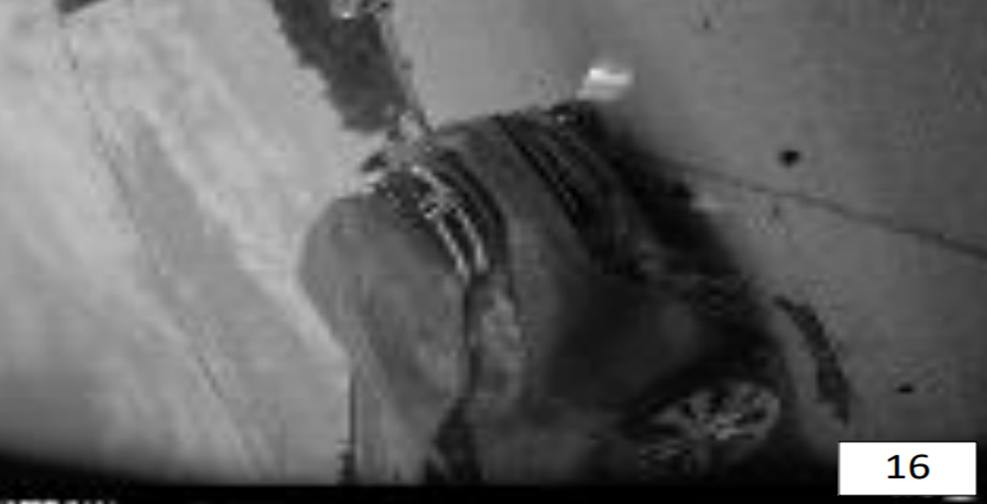
This shows that it is important to gather all data from the crash vehicles, including the data and photos that may be available from the victim’s car.
Although vehicle data can be extremely helpful to litigators in car crash cases, a thorough investigation of the facts will also include (A) seeing if nearby businesses have security cameras that captured the crash, (B) dashcam requests, (C) witness interviews, and (D) identifying other app/telematics sources.
4. Original Digital Photos and Metadata
"If an insurance company tries to send you printed pictures or PDF-scanned pictures of an accident scene or property damage, insist that they send you the original electronic pictures so that you can look at the metadata and determine when and where the pictures were taken." - Joel Williams
This is a small detail that can become important in a disputed case. A flattened PDF or printed image may strip away metadata that existed in the original file. The original digital image may contain creation time, device information, and sometimes location data. Metadata does not automatically prove liability, but preserving the original file gives the parties and experts more information to evaluate.
5. Surveillance Video, Dashcams, Witnesses, and the Crash Report
A nearby business camera, Tesla or other vehicle camera, doorbell camera, dashcam, or eyewitness may capture the driver looking down, drifting between lanes, failing to brake, or holding a device. The key is working fast to secure this evidence. Commercial surveillance systems can overwrite footage on short retention cycles. A lawyer investigating a serious Kennesaw crash should identify likely cameras early, particularly near shopping corridors, signalized intersections, and businesses along the route.
Williams Elleby Howard & Easter was able to convince an insurance company to increase its offer from $0 to $500,000.00, after the at-fault driver denied liability following a wreck at this intersection Wade Green Road and Hickory Grove Road in Kennesaw because we took the time to obtain security footage from the nearby QT that showed the dangerous actions of the at-fault driver:
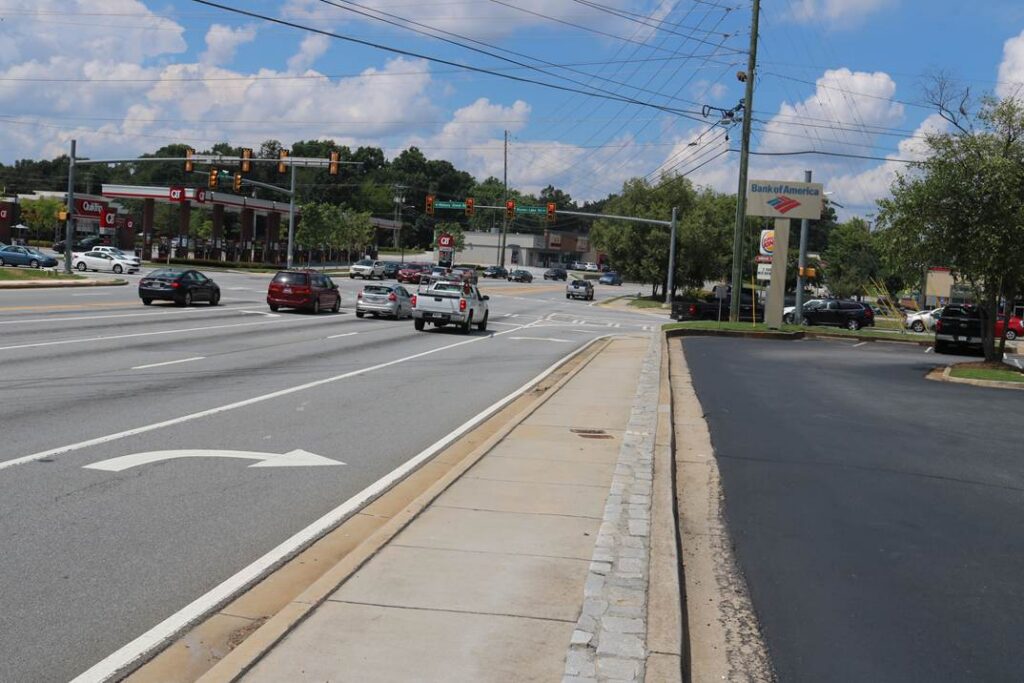
The crash report still matters, but it is the starting point, not the entire case. An officer may cite the driver, record an admission, identify witnesses, or note contributing factors. Just as importantly, the report fixes basic facts such as date, time, roadway, vehicles, and investigating agency that can be matched against electronic records.
What Distracted Driving Changes in a Georgia Injury Case
Evidence that a driver violated Georgia’s Hands Free law can strengthen a negligence claim and, depending on the facts and the legal theory presented, may support a negligence per se theory. But, a traffic-law violation does not eliminate the need to connect the wrongful conduct to the crash and the resulting injuries. The timing has to make sense.
For example, proof that a driver sent a message ten minutes before a collision is different from proof of phone activity during the seconds surrounding impact. Good distracted-driving litigation is built around chronology, not just the existence of a phone record.
Georgia Comparative Fault Can Put the Injured Driver Under a Microscope Too
What if the insurance company says I was also distracted? Georgia uses a modified comparative-fault rule. Under O.C.G.A. Section 51-12-33, damages can be reduced by the injured person's percentage of fault, and a plaintiff who is 50% or more responsible cannot recover damages. That makes evidence about both drivers important in a disputed distracted-driving crash.
An insurer may argue that the injured driver was speeding, following too closely, changing lanes, looking at a phone, or otherwise failed to avoid the crash. That is why a disciplined investigation should preserve your own relevant evidence too. The goal is not to collect only facts that hurt the other driver’s case; it is to reconstruct the event accurately enough to address predictable fault arguments.
Several years ago, I was trying a case in Hall County, Georgia where the at-fault driver admitted that he failed to stop at a stop sign. However, my client also testified that the crash occurred a few seconds after she looked down to adjust the volume on her vehicle’s audio system. The jury latched on to my client’s testimony and allocated 15% fault to her for being distracted by her audio system. Although we won the case, my client’s recovery was reduced by 15% just because she looked away from the road for a few seconds.
The lesson here is that we must consider the fault of all parties when evaluating a case for settlement, mediation, and trial.
Does Texting Automatically Support An Award of Attorney’s Fees? No.
Can a distracted-driving victim recover attorney’s fees as damages in Georgia? Possibly, but not simply because a phone was involved. Fee awards require proof beyond ordinary negligence. Georgia appellate decisions analyze the facts surrounding the conduct and whether there is evidence of aggravating circumstances or a culpable pattern. A routine negligence case does not become an attorney fee case merely because a driver made or received a phone call.
This is an area where overstatement hurts credibility. In Love v. McKnight, 321 Ga. 196, decided by the Supreme Court of Georgia in 2025, evidence of continuous phone calls before a rear-end collision did not automatically transform routine negligence into the kind of bad faith conduct necessary for litigation expenses under O.C.G.A. § 13-6-11.
So, at least in Georgia, litigants must prove more than negligent cell phone conversations to recover attorney’s fees and expenses of litigation. In this author’s experience, cell phone usage that is more than conversations such as manually responding to emails, playing games, or browsing social media may create a jury issue as to whether the distracted driver displayed a conscious disregard of known harmful consequences. Sometimes that will not be enough. If an accident victim can show a pattern of this dangerous conduct, he or she will have a better chance of recovering attorney’s fees or punitive damages.
Medical Evidence Still Determines the Injury Side of the Case
Proving distraction answers only the liability side of the case. The injured person must still document what the collision caused. That means appropriate medical evaluation, diagnosis, treatment, prognosis, lost-income documentation, and other evidence of damages. Many Kennesaw crash victims with serious injuries receive emergency care at Wellstar Kennestone Regional Medical Center, a local Level 1 trauma center.
"In order to document injuries after a Kennesaw car accident, it is important to see a medical professional who can properly diagnose your condition and develop a reasonable treatment plan. Delays or gaps in treatment will give the at-fault driver's insurance company additional reasons to offer as little as possible." - Joel Williams
Sometimes, the hardest cases for Williams Elleby Howard & Easter attorneys to win are those where our clients do not seek medical care soon after a wreck. Or, worse, they ignore their doctor’s advice or miss appointments for medical care. Defense attorneys and insurance companies use these delays or gaps in treatment to support arguments that (1) The victim isn’t hurt (2) The victims isn’t hurt as badly as they claim, or (3) The victim would have recovered faster if they attended appointments and followed their doctor’s advice.
Of course, every client does not need the same medical treatment. But, every client who brings an injury case needs to have their injuries documented and treated by a qualified and trained medical professional. Objective examinations and diagnoses by trained medical professionals can be strong evidence to prove the cause and extent of injuries in personal injury case.
What to Do After a Suspected Distracted-Driving Crash in Kennesaw
- Get to a safe location and call 911 when the circumstances require it. Ask for law enforcement and emergency assistance for injuries.
- Seek appropriate medical evaluation. Some injuries are not fully apparent at the scene, and contemporaneous medical records can later help explain when symptoms began.
- Photograph and video the scene if you can do so safely. Capture vehicle positions, damage, traffic signals, skid or debris evidence, road signs, and the surrounding businesses or cameras.
- Identify witnesses. A neutral witness who saw the other driver looking down or holding a phone can become extremely important.
- Preserve original files. Keep the original photos and videos rather than only screenshots, social-media copies, or PDFs.
- Write down what you observed. If the other driver admitted texting, apologized for looking at a phone, or had a device visible, record the exact words and circumstances while they are fresh.
- Be careful with insurer requests. A recorded statement or broad authorization can create issues before you understand the evidence and your injuries.
- Get legal advice early in a serious or disputed case. The two-year lawsuit deadline is not a reason to wait two years to identify video, phone, vehicle, or app evidence. Electronic evidence is unlikely to be available two years after a wreck.
Distracted Commercial Drivers and Tractor-Trailers Require Faster Evidence Preservation
A distracted-driving crash involving a tractor-trailer, delivery truck, bus, or other commercial vehicle can involve evidence beyond the driver's personal phone.Potential sources include dispatch messages, employer-issued devices, fleet-management platforms, electronic logging systems, onboard cameras, GPS data, safety policies, and training records. Federal regulations also restrict texting and handheld mobile-phone use by many commercial motor-vehicle drivers.
"It is extremely important to reach out to an experienced Kennesaw lawyer after an accident with a commercial vehicle or tractor-trailer because most commercial carriers have rapid response teams on standby. Those rapid response teams are deployed to accidents 24/7 to gather and document evidence. Your lawyer will be at a disadvantage if he or she is not given the same opportunity to promptly visit the scene and gather critical evidence." - Joel Williams
To illustrate the importance of securing evidence early, let’s examine some dash cam footage our firm secured from a third party after a tractor-trailer crash on I-75 in Acworth, Georgia:
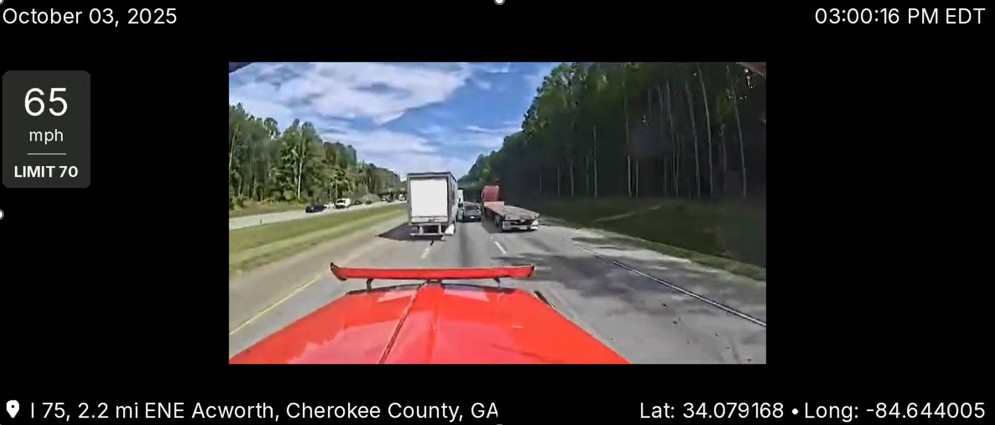
In this case, our client was driving the pick-up truck squished between the tractor trailers. Initially, the at-fault truck driver denied that he came into our client’s lane. Fortunately, our client hired us early and we were able to secure video footage from nearby GDOT interstate cameras. Although the GDOT cameras did not show the wreck, they did reveal a tow truck that was driving behind the tractor-trailers and our client. We contacted the tow truck company and its manager was able to provide dash cam video showing the at-fault truck driver merging into our client’s lane. Armed with this evidence, we were able to successfully resolve the case in our client’s favor.
If our client had waited too long to contact us, we probably would not have been able to secure the GDOT camera or tow truck footage. That would have made the case much harder to win. At a minimum, it would have resulted in many more months or years of litigation to reach a resolution.
Deadlines and Cobb County Venue
How long do I have to file a distracted-driving injury lawsuit in Georgia? O.C.G.A. § 9-3-33 generally requires an action for personal injuries to be filed within two years after the claim accrues. Exceptions and other deadlines can apply, so the limitation period should be analyzed for the specific case. Evidence preservation often needs to begin within days or weeks, not years.
Venue is a separate issue from the filing deadline. If the at-fault driver is a Kennesaw resident, a suit against that individual will often be venued in Cobb County, subject to Georgia's venue rules and the identity of all parties and claims. Most automobile injury cases are handled in the State Court of Cobb County, while the proper forum can differ in multi-defendant, corporate, federal-jurisdiction, or other cases.
Why Local Experience Adds Value in a Kennesaw Distracted-Driving Case
A local Kennesaw lawyer should offer more than a Kennesaw mailing address.The practical value comes from knowing the roads, the courts, the common defense arguments, and the evidence that actually moves a case. In distracted-driving litigation, that also means understanding electronic evidence well enough to ask the next question after the driver says, "I was not on my phone."
I have represented injured people in Georgia vehicle-crashes and other personal-injury cases for more than two decades. I founded the firm that became Williams Elleby Howard & Easter in 2013, and have recovered more than $100 million in verdicts and settlements over the course of my career. I have also taught other lawyers through seminars and wrote "What to Know About Georgia's New Distracted Driving Law" for CaseMetrix in May 2018, the same year Georgia's current Hands-Free Act took effect.
When a driver denies being distracted, my first question is: “What electronic trail did this collision leave behind, and how quickly can I preserve it?” Modern vehicles, cell phones, apps, telematics systems, cameras, and even digital metadata may contain evidence that helps establish what the driver was doing before the crash, so I immediately think about the steps necessary to secure that information before it is overwritten or lost. Technology is constantly evolving, and part of being an effective accident lawyer is continuing to learn where new sources of evidence can be found and how to preserve that evidence.
Frequently Asked Questions About Distracted-Driving Cases in GA
What counts as distracted driving in Georgia?
Distracted driving is broader than texting. Georgia law requires due care and restricts specified electronic-device conduct, while safety agencies also recognize visual, manual, auditory, and cognitive distraction. Eating, reaching for an object, passenger interaction, navigation, and other conduct can be relevant depending on the facts.
Is it illegal to hold a cell phone while driving in Georgia?
Generally, yes. O.C.G.A. Section 40-6-241 prohibits physically holding or supporting a wireless telecommunications device while operating a motor vehicle, subject to statutory exceptions and permitted hands-free uses.
Is it legal to text while stopped at a red light in Georgia?
Do not assume a red light makes handheld use lawful. Georgia's Hands-Free Law applies while operating a vehicle on a highway, and the safest practical rule is to wait until the vehicle is lawfully parked before handling or typing on the phone.
What if the police report does not say the other driver was distracted?
That does not end the inquiry. Distraction is frequently underreported because officers may lack independent proof at the scene. Phone records, device or app data, vehicle data, video, witnesses, and admissions can become important later.
Can a lawyer subpoena the other driver's cell-phone records?
In litigation, relevant phone records can often be sought through discovery or third-party process, subject to Georgia procedural rules, relevance, privacy objections, retention, and the facts of the case. A lawyer should tailor the request to the collision time and issues rather than demand unlimited personal data.
Do cell-phone records show the content of text messages?
Often they do not. Carrier records may establish timing or transmission information without preserving the text content itself. That is why the phone, apps, cloud data, screenshots, admissions, and other sources may matter.
Can Life360 or another driving app help prove distraction?
Potentially. Some apps and telematics platforms record location, speed, hard braking, acceleration, or phone-handling events. What a particular app stores, for how long, and whether the data can be authenticated are case-specific questions.
Can vehicle black-box data prove the driver was texting?
Usually not by itself. Event data can show speed, braking, deceleration, and other vehicle behavior. It can become powerful when correlated with phone activity, video, witness testimony, or other evidence.
Does a Georgia Hands-Free Law violation automatically prove my injury case?
No. A violation can be significant evidence and may support a negligence-per-se theory in an appropriate case, but the plaintiff still must establish causation and damages, and the facts determine how the statute applies.Can I recover punitive damages because the driver was texting?
Can I recover punitive damages because the driver was texting?
Not automatically. Punitive damages require more than ordinary negligence. Georgia courts look closely at aggravating circumstances, causation, and the nature or pattern of the conduct.
What if the insurance company says I was partly at fault?
Under O.C.G.A. Section 51-12-33, a plaintiff's damages can be reduced by the plaintiff's percentage of fault, and a plaintiff who is 50% or more responsible cannot recover. Evidence about both drivers therefore matters.
How long do I have to sue after a Kennesaw distracted-driving crash?
Georgia generally provides a two-year limitation period for personal-injury actions under O.C.G.A. Section 9-3-33, but exceptions and other deadlines may apply. Evidence-preservation issues arise far sooner.
Where would a distracted-driving lawsuit be filed if the at-fault driver lives in Kennesaw?
Many claims against Kennesaw residents are venued in Cobb County, and automobile tort cases are often filed in the State Court of Cobb County. The correct venue and court depend on the defendants, claims, and jurisdictional facts.
What changes when the distracted driver was operating a commercial truck?
The evidence pool can expand to employer devices, dispatch records, ELDs, fleet telematics, onboard cameras, and safety policies. Federal motor-carrier rules may also apply, and commercial carriers often investigate serious crashes immediately.
How much does a Kennesaw distracted-driving accident lawyer cost?
Williams Elleby Howard & Easter handles car-accident cases on a contingency-fee basis, so clients do not pay an attorney fee unless the firm obtains a recovery. The written fee agreement controls the percentage, costs, and other terms for a particular representation.
The Bottom Line: Preserve the Digital Trail
The central problem in a distracted-driving case is rarely understanding that texting is dangerous. It is proving what happened in the seconds before impact.That is why a serious Kennesaw investigation should look beyond the police report to the digital trail: phones, apps, vehicles, cameras, metadata, witnesses, and records that can place the driver's conduct on a timeline.
If you were seriously injured by a driver you believe was distracted in Kennesaw or elsewhere in Cobb County, Williams Elleby Howard & Easter can evaluate the evidence, explain your options under Georgia law, and determine what should be preserved before it disappears. Call 404-389-1035 for a free consultation.
If you haven’t been in a wreck, remember this: Before you drive through Kennesaw, put the phone away. If distraction causes a crash, the technology on your phone, your apps, and your vehicle may end up telling the story of what you did wrong, especially if the person you hurt hires Williams Elleby Howard & Easter.
About the Author
Joel Williams is the Managing Partner of Williams Elleby Howard & Easter in Kennesaw, Georgia. He has represented injured people in vehicle-crash and other personal-injury cases for more than two decades. Over the course of Joel’s carrer, he has helped secure more than $100 million in verdicts and settlements across vehicle-crash and other injury matters. He has written and taught on trial practice and Georgia law, including a May 2018 CaseMetrix article titled "What to Know About Georgia's New Distracted Driving Law." Read Joel Williams' full attorney biography.

Written By:
Attorney Joel Williams
Williams Elleby Howard & Easter
3450 Acworth Due West Rd.
Suite 610
Kennesaw, GA 30144
Personal Injury Attorney
20+ Years of Experience
Last Updated:
August 2026